What the Glass List Is Really Saying: A Regular’s Guide to Wine Bar Chalkboards
Photo: The original uploader was Snow storm in Eastern Asia at English Wikipedia., CC BY 3.0, via Wikimedia Commons
Walk into a UK wine bar in 2026 and the by-the-glass list is often the most interesting thing in the room. It might be a chalkboard behind the bar, a printed sheet clipped to a clipboard or a QR code that refuses to load. Either way, it is not a test. It is a short, changing edit of what the staff think is delicious right now — and it is there to be talked about.
Start with structure, not price
Most lists are arranged by style rather than price: something brisk and salty, something textural, something red and juicy, something sweet. That is a useful map. If you know you want refreshment, head for the top. If you want comfort, go lower. The order is often the bar’s suggested journey through the list, not a ranking of quality.
Some boards lead with grape, some with region, some with a mood. A Gamay section is not there because Gamay is fashionable, though it is. It is there because the staff have found a juicy, chillable red that works with the food. A section called ‘open and pouring’ is simply the practical stuff: bottles that are already open and ready to go. That is where the value often sits.
What the price tiers actually mean
Price tiers usually reflect cost and rarity, not a neat ladder from bad to good. A £6 glass and a £12 glass can both be excellent. The second might be a small-production wine, an older vintage or a pour from a bottle opened with Coravin so it can be served without wasting the rest. In 2026, Coravin pours are common in UK wine bars and shops, which means you can try something special by the glass without committing to a bottle.
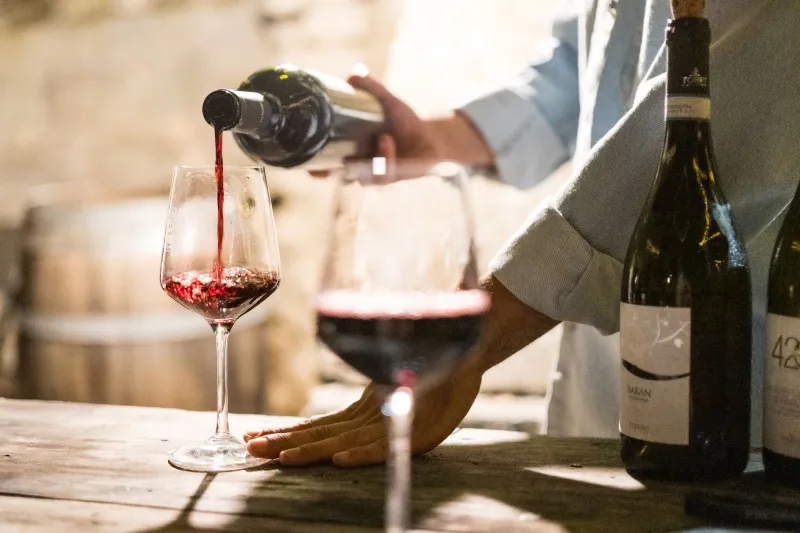
Ask if there is a premium pour section. If there is, treat it like a flight: one glass shared between two is a fine way to end a meal. Also check whether the price is for 125ml or 175ml, and whether a carafe is better value. A carafe is often the sweet spot for a table of two who want a second glass without opening a bottle.
Staff recommendations are the best clue
If a wine has a little star, a handwritten note or a staff pick tag, ask why. The answer will tell you more than any tasting note. Staff recommendations are usually driven by what is drinking well, what is moving and what they are excited about. They are also a good way to find the odd bottle that does not fit neatly into a grape or region section.
A good question is: what is open and showing well? Another is: what would you drink with the snack I am about to order? You do not need to know the vocabulary. You just need to give the person behind the bar something to work with: light or rich, dry or fruity, adventurous or familiar.
Simple questions that make the list less intimidating
Ask for a taste if you are torn between two wines. Most bars will oblige, especially if you are ordering food. Ask what is similar but lighter, drier or cheaper. Ask whether the list has anything local, or anything by a producer they are proud of. Ask what is likely to run out first — that is often the most interesting pour on the board.
Regulars do not memorise the chalkboard. They ask two questions, take a chance on one unknown glass and share. That is the whole trick. The board changes; your curiosity does not have to.
Snack pairings that make the most of the pour
Chalkboards and snacks are a team. Salt and bubbles work because the acidity cuts through the salt. Fat and acidity work because the wine refreshes the palate. Sweetness and blue cheese work because the wine’s sugar softens the cheese’s bite.
If you are ordering a crisp, saline white, look for olives, anchovies, salted almonds or a plate of oysters if the bar has them. With a juicy red, go for charcuterie, mushroom croquettes, a burger or something tomato-based. With an off-dry Riesling, order something spicy or salty. With sherry, keep it simple: salted nuts, cured meat, a few cubes of manchego. With a glass of something sparkling, crisps are not a cop-out. They are a public service.
At Wine Room, we like a small snack rather than a full menu when the point is the glass. A bowl of good olives, sourdough and butter, or a couple of slices of cheese will do more for the wine than a plate that fights it. Ask for the snack that the staff would order with their own glass. That is usually the right answer.
The regular’s habit
A wine bar chalkboard is not a syllabus. It is a snapshot of a shop or bar’s taste, budget and mood. Read the structure, ask about the open bottles, take one punt and share the last glass. That is how you order like a regular — and, more importantly, how you end up staying for another one.