Six Shop Bottles for the Christmas Table (and the Relatives Who Arrive With Opinions)
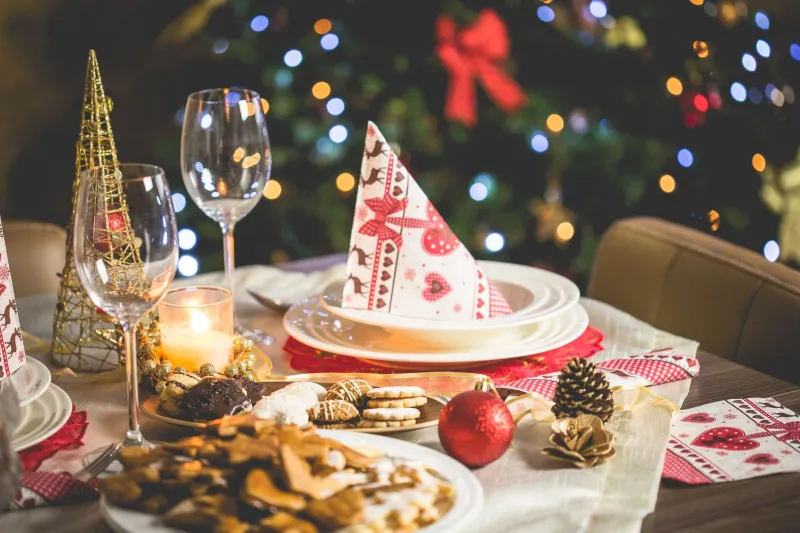
Christmas dinner is less a meal than a small festival with seating. There is turkey to negotiate, a nut roast that needs love, sprouts that divide families, and at least one relative who arrives with a strong opinion about corkage. The wine shop answer is not to buy one heroic bottle and hope. It is to build a small, flexible line-up that can move from the first knock at the door to the last slice of Christmas cake.
These are six bottle styles, not six brands. Your local independent wine shop will have its own favourites, and that is the point: ask, taste, take a chance. We have kept an eye on budget tiers, too, because December has a way of emptying pockets before the cheese arrives.
Start with bubbles: English sparkling
A bottle of English sparkling is the festive handshake. It says something is happening, and it says it with lemon brioche rather than a fanfare. Look for a brut or blanc de blancs from Kent, Sussex or Hampshire. The acidity is bright enough to cut through salted nuts and pigs in blankets, and it will happily follow you to the table if the turkey is not quite ready.
Budget tier: expect to pay £25–£40 for a good independent. If you want to keep things tighter, a crémant is a fine understudy at £15–£22.
Serve it: chill overnight, not in the freezer. A sparkling wine that is too cold tastes of very little, and Christmas already has enough people talking without saying much.
The all-rounder white: dry Riesling
Dry Riesling is the quiet hero of the festive table. It has enough acidity for rich gravy, enough texture for nut roast, and a citrus-and-stone edge that makes sprouts taste less like a punishment. It also handles a little spice if someone has brought a Boxing Day curry into the equation.
Look for dry styles from Germany, Alsace or Clare Valley. Off-dry versions can work with ham, but for turkey and all the trimmings, dry is the safer crowd-pleaser. If Riesling feels too niche for your table, a dry Chenin Blanc or Albariño will do a similar job.
Budget tier: £12–£20 is a sweet spot. Spend nearer £20 if you want more texture and length.
Make ahead: open it 20 minutes before serving and keep the bottle in a cool room. No need for a decanter; just let it breathe.
The red that likes the fridge: chilled Beaujolais
This is the bottle that wins over the sceptics. A Beaujolais-Villages or a cru such as Fleurie or Morgon, served lightly chilled, is juicy, floral and low in grip. It will not fight the turkey, and it is genuinely lovely with Boxing Day ham, cold cuts and a slab of leftover stuffing.
Chill it for 20–30 minutes before serving. You want cool, not cold: around 14–16°C. If you are buying a cru Beaujolais, expect more depth; if you are buying a basic Beaujolais-Villages, expect pure, cheerful glugging. Both have a place.
Budget tier: £12–£25 depending on the cru.
Wildcard swap: if you want to surprise the table, a chilled Lambrusco or a dry amontillado sherry can do the same job of waking up the palate.
A richer white for the table: white Burgundy or Chablis
There is a reason white Burgundy keeps turning up at Christmas. Chardonnay with a bit of age and oak has the weight for roast turkey, bread sauce and buttery potatoes, but it still keeps a line of acidity. Chablis is the leaner, more mineral option; a Macon or a modest white Burgundy is the broader, more generous one.
This is the bottle to open when the table is finally full and the first proper plate is being passed around. It also works with a mushroom wellington, which is more than can be said for some reds.
Budget tier: £20–£35. If you are spending less, look for a good Macon-Villages or a Chablis from a reliable independent.
Serve it: not straight from the fridge. Take it out 15 minutes before pouring so the fruit can open up.
The middle-ground red: Pinot Noir
Pinot Noir is the diplomat of the Christmas table. It is light enough for turkey, structured enough for beef if that is your tradition, and gentle enough not to overwhelm nut roast. Look for Bourgogne Rouge, a New Zealand Pinot from Martinborough, or a cool-climate English Pinot Noir if your shop has one.
Avoid anything too heavily oaked. You want red fruit, a little earth, and a finish that leaves room for the next mouthful. This is also the bottle that tends to disappear fastest once the cheese comes out, so buy two if you have a thirsty crowd.
Budget tier: £15–£30. There is excellent value in Bourgogne Rouge and regional New Zealand Pinot at the lower end.
Make ahead: open the bottle an hour before serving, but keep it in a cool spot. Pinot does not need a lecture; it needs a little air.
The finish: tawny Port
Tawny Port is the Christmas bottle that keeps on giving. It has the caramel, dried fruit and nutty edges that make mince pies taste even better, and it is just as happy with a wedge of Stilton or a slab of Christmas cake. Unlike vintage Port, tawny is ready when you are. No decanting, no ceremony, no arguments.
A 10-year-old tawny is the sweet spot for most tables. A 20-year-old is a treat if the budget allows. Serve it slightly cool, and pour small measures: this is a finish, not a race.
Budget tier: £15–£30 for a 10-year-old; £35+ for a 20-year-old.
The shop-floor plan
If you are buying for a mixed table, start with bubbles and one white, then add a chilled red and a Pinot. That covers the meal. Add tawny Port for the cheese and you have a complete Christmas. If you are feeding a smaller group, drop the white Burgundy and put the money into a better Beaujolais or a second bottle of sparkling.
Make-ahead tips: chill sparkling and white wines overnight; keep Beaujolais in the fridge for 30 minutes before serving; open Riesling and Pinot an hour ahead; leave Port in a cool cupboard. Use one style of glass for everything if you want to save washing up. Christmas is long enough without a decanter seminar.
And if the in-laws bring their own bottle? Accept it gracefully, put it on the table, and keep the tawny for yourself. That is what the season is for.