Half Bottles, Whole Picture: The Quiet Case for Drinking Smaller in 2026
There is a moment in a good wine bar when the menu arrives and you realise you want three things at once: the crisp Jura white, the chilled Gamay, and whatever the kitchen is doing with mushrooms. A full bottle makes that a commitment. A half bottle makes it a conversation. In 2026, the smartest drinkers are ordering smaller not because they are being sensible in a dreary way, but because smaller gives them a bigger picture.
The half bottle is not a compromise
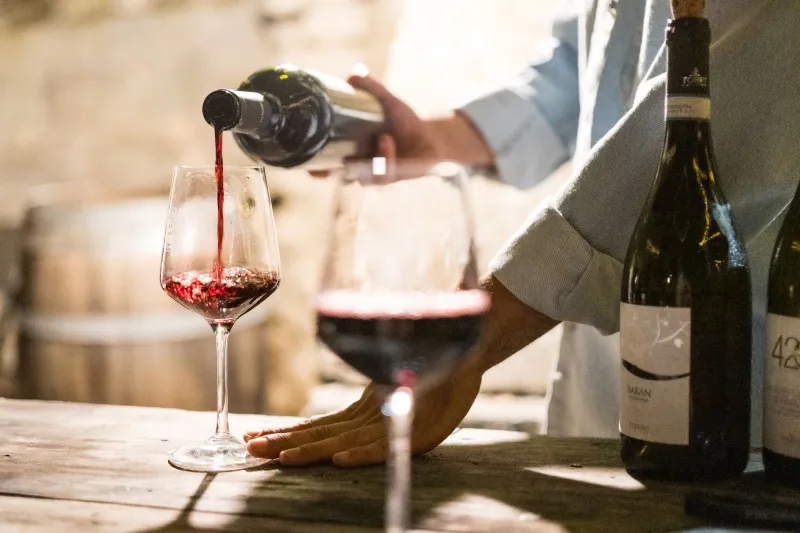
For years, halves were treated as the lonely option: the bottle for the person drinking alone, or the afterthought on the bottom shelf. That has changed. UK wine bars are listing more 375ml bottles, and restaurants are using 50ml tastes to let a table build a meal across several wines without turning lunch into a three-bottle epic.
The appeal is obvious once you say it out loud. You can pair more boldly. You can try the skin-contact white and the light red. You can order the sweet wine without committing to a full bottle. You can have a second glass of something different rather than a second glass of the same thing. And you can still walk home in a straight line.
This is not anti-alcohol, and it is not a lecture. It is a question of range. A half bottle is a licence to be curious.
What sommeliers are seeing
‘People are treating the list like a tasting menu now,’ says a sommelier at a Manchester wine bar. ‘A half bottle lets two people try a white from the Jura and a cru Beaujolais without feeling like they have made a mistake. It takes the fear out of the middle of the list.’
Another sommelier, this time in Bristol, makes a similar point about 50ml tastes. ‘The 50ml pour is the new flight,’ she says. ‘It is enough to understand the wine, not enough to derail the evening. Guests are much more willing to try a sherry or an orange wine when it is a taste rather than a glass.’
There is a practical edge, too. Restaurants waste less. Bars can open more interesting bottles. A table of four can share a half of something rare without needing to make it the whole event. The format suits the way people actually eat and drink now: a bit of this, a bit of that, and no heroic finish.
The case against, briefly
Half bottles are not perfect. They usually cost more per millilitre than a full bottle, and the choice is still smaller than it should be. Some producers do not make them at all. There is more glass per drop, which is not ideal. And a half bottle of a delicate white can age faster than its full-size sibling, so freshness matters.
But those are arguments for better buying, not for abandoning the format. If you are in a wine shop, a half bottle is often the difference between trying a wine and walking past it. That is worth a small premium.
A mini buying guide for the wine shop
Start with regions that suit the half format. Chablis, Sancerre, dry Riesling, Beaujolais, Pinot Noir, tawny Port and sherry all work well in 375ml. Sparkling halves are useful for celebrations, especially if you want one glass each without opening a full bottle.
Check the fill level and the closure. A screwcap is a good sign for freshness in young whites. Ask how long the bottle has been on the shelf; a half bottle of a delicate white is not the place to gamble on dusty stock. If you are buying several, keep them upright and cool.
Budget-wise, expect to pay £8–£15 for most halves, more for good Chablis or cru Beaujolais. If a half costs nearly as much as a full bottle, ask why. Sometimes it is rarity; sometimes it is just the packaging.
Host a half-bottle tasting at home
This is simpler than it sounds. Six people, four to six halves, and a table of small pours is plenty. A 375ml bottle gives you roughly five 75ml glasses or seven 50ml tastes, so plan for overlap rather than perfection.
Pick a loose theme: cool-climate whites, reds that like a chill, or a tour of the shop’s stranger shelves. Open in order from light to rich. Put bread, cheese and something salty on the table. Give everyone a glass and a piece of paper, and resist the urge to turn it into an exam. The point is to talk about what you like, not to score the wines out of 100.
If you want a simple line-up, try this: an English sparkling, a dry Riesling, a chilled Beaujolais, a Pinot Noir, and a tawny Port. That is five halves, a whole evening, and no leftover wine going flat on the counter.
The bottom line
Drinking smaller is not about drinking less for the sake of it. It is about drinking more widely. In a UK wine scene that is finally relaxing about by-the-glass lists and informal tasting, the half bottle is the most sociable tool on the shelf. Order the half. Try the 50ml taste. Let the table be the point.