The Half-Empty Bottle Isn't the Problem: How to Read a Wine Bar's Glass List
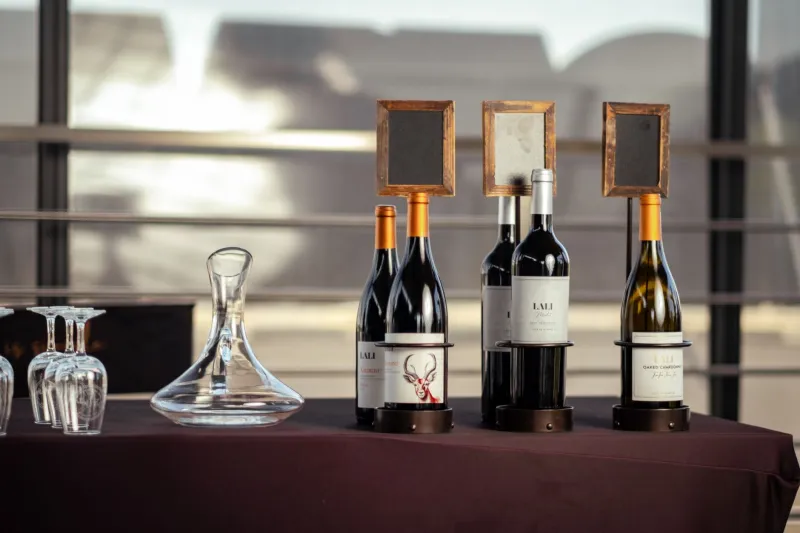
There is a moment in every wine bar when a bottle becomes a glass list. The cork comes out, the first pour goes to someone at the counter, and a small clock starts ticking. From that point on, the wine is no longer just stock. It is an open question: will it be as good on Thursday as it was on Tuesday, and who decides?
That question sits behind every chalkboard in the country. We tend to admire the glass list for its range or its prices, but the real craft is in what happens after the bottle is open. The last glass is not a problem to hide. It is a test of how well a bar is run.
The bottle is open. Now what?
Wine bars generally reach for one of a few tools. The simplest is a stopper and a fridge, which buys a day or two for many whites and lighter reds but does very little for delicate aromatics. A vacuum pump removes some air and can help a robust red survive an extra night, though it is not a magic wand. Inert gas systems blanket the wine with argon or nitrogen, slowing oxidation without pretending the wine is untouched. And then there is the needle-and-canula route, most associated with Coravin, which lets a bar pour a glass without fully opening the bottle at all.
None of these systems is a licence to keep a wine indefinitely. A fresh, unoaked white may be lovely on Wednesday and tired by Friday. A tannic red can hold its shape for longer. A fragile older wine might change within hours. The good bars know this and treat preservation as a way of buying time, not stopping it.
The taste test behind the bar
The most important piece of equipment is not the gas canister. It is a clean glass and a member of staff willing to use it. In a well-run bar, someone tastes the open bottles before service. Not a theatrical slurp, just a quick check: is this still singing, or has it gone quiet? If it has gone quiet, the wine does not automatically go down the sink. It may become a cooking wine, a staff drink, or part of a daily special. But it should not be poured for a customer who is paying for the pleasure of a fresh glass.
That is the quiet contract of a by-the-glass list. You are trusting the bar to make a judgement on your behalf. When it works, you get to try something new without committing to a whole bottle. When it fails, you get a flat, tired wine and a small dent in your confidence. The difference is usually not the preservation system. It is the routine around it.
Last-glass lists, staff tastings and the beauty of a bin end
Some of the most enjoyable things in a wine bar come from the end of a bottle. A last-glass board, a daily special, a flight built around open bottles, a cheese pairing that exists because there is half a bottle of something generous left in the fridge. These are not scraps. They are the informal economy of a glass programme, and they often give you the best value and the most interesting pour of the night.
Staff tastings matter here too. A bar that tastes together learns together. It also develops a culture where the last glass is discussed rather than disguised. If the team knows that the Gruner Veltliner is on its final legs, they can steer you towards it at a reduced price, or away from it entirely. That kind of honesty is worth more than a fancy wine list.
In the UK, this sits somewhere between thrift and hospitality. We are a nation that enjoys a bargain, but we also expect a certain standard. The best bars handle both instincts by being upfront. They do not pretend a wine is fresher than it is, and they do not make you feel awkward for asking.
The economics of not pouring good wine away
Open bottles cost money. So does waste. A bar has to build the risk of spoilage into the price of a glass, which is one reason a glass often looks expensive next to a bottle. You are not just paying for the wine. You are paying for the fact that the bottle was opened, kept, checked and possibly not finished.
This is why a well-run glass programme tends to be tight rather than sprawling. A list of twenty open wines sounds generous until you realise that half of them may be on their last day. A shorter list, changed regularly, with a few specials at the end, is often a better sign. It suggests the bar is buying and opening with purpose rather than filling a chalkboard for the sake of it.
How to spot a glass list that is looked after
Start with the chalkboard. Does it change? Does it mention when a bottle was opened, or offer a last-glass price? Are there half bottles or smaller pours? When you ask about a wine, does the person behind the bar tell you how it is showing tonight, rather than simply reciting the tasting note?
Look for a fridge that is not crammed to the door, a small selection of open wines that makes sense together, and staff who seem comfortable saying, 'I would not pour that one today.' That last sentence is a good sign. It means someone is paying attention.
And if you are unsure, just ask. 'What is open and drinking well?' is a perfectly normal question. 'How long has this bottle been open?' is not rude. 'Is there anything on its last legs that is worth trying?' is the sort of thing a regular might say, and it often leads to the most interesting glass on the table.
The last glass does not have to be an afterthought. In a good wine bar, it is part of the conversation. The bottle is open, the clock is ticking, and someone has decided that the best thing to do is share it with you. That is not a problem. That is the point.