The Ten-Minute Bottle: Wine Gifts That Don’t Look Rushed
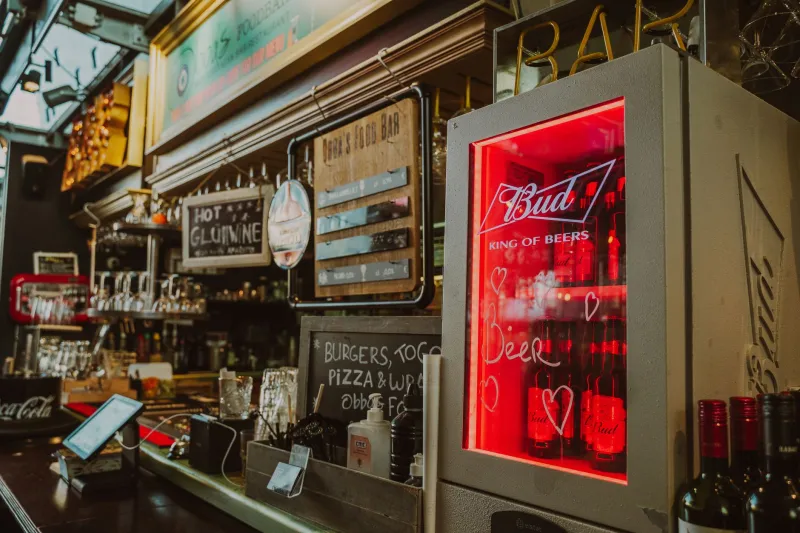
It is 5.40 on a Friday. You are due at a housewarming at seven, the card is still in the car, and the only shop between you and the bus stop is a small wine merchant with a chalkboard outside and a selection that suddenly looks like a foreign language. This is not the moment for a deep dive into the Loire. It is the moment for a plan.
Buying wine as a gift is mostly a confidence trick, and the good news is that the trick is easy to learn. You do not need to know what the recipient drinks. You need to know what the evening is, what you can spend, and how to ask for help without feeling like a fraud. Here is the ten-minute route.
Read the shelf by occasion, not by grape
Most wine shops organise themselves in a way that makes sense to the people who work there and very little sense to anyone arriving in a hurry. The grape varieties are a helpful map, but they are not the territory. Instead, start with the question: what is this bottle for?
A dinner at someone’s house is not the same as a birthday, and neither is the same as a thank-you for a weekend of dog-sitting. If you are going to a meal, look for something that will sit comfortably alongside food without demanding centre stage: a mid-weight red, a textured white, a decent bottle of fizz that will survive being opened before the starters. If the gift is for a new home, something with a bit of staying power works nicely—a bottle that can go in a cupboard and be forgotten until a better day.
If it is a thank-you, keep it simple and drinkable. The worst gift wine is the one that is too precious to open. The second worst is the one that gets opened, tastes like a dare, and sits half-finished on the counter.
Ask three questions, then trust the answer
The person behind the counter is the most underused resource on the British high street. They would rather help you than watch you stare at a shelf for nine minutes. Ask them three things:
What are they cooking, or what is the occasion? What do they normally drink—red, white, fizzy, nothing at all? And what would you choose if you had my budget?
That last one is the important one. It gives the staff member permission to make a recommendation rather than simply point you towards the most expensive bottle in the section. It also tells them you are serious about spending well, not showing off. In most independent shops, the person on the floor has a favourite under fifteen quid and a favourite under thirty, and they will be delighted to tell you about both.
One useful follow-up: ask what they would buy if it were their own money. The answer is usually more interesting than the one you get when you ask for something nice.
Three price tiers that do the actual work
Gift wine lives in three practical bands, and knowing which one you are in makes the whole thing faster.
Around £10 to £15: the useful bottle
This is the band where you buy reliability. A crisp, dry white from somewhere sunny; a smooth, juicy red that will not frighten anyone; a small bottle of something sparkling for a toast. Avoid anything with a novelty label or a cartoon animal unless you know the recipient’s sense of humour very well. At this price, the win is not surprise—it is the pleasure of a bottle that will actually get drunk.
Around £18 to £25: the interesting bottle
This is the sweet spot for a gift that feels considered. You can afford a wine with a bit of character: an unusual grape, a smaller producer, a region the recipient has probably heard of but never tried. Ask for something with a story attached—a family domaine, an old-vine cuvée, a bottle from a place that is not the obvious choice. This is also where good English sparkling wine starts to make sense, which is a nice thing to bring to a celebration in this country.
Around £30 to £50: the occasion bottle
Save this for the people you actually know, or for an occasion that deserves it. A thoughtful bottle at this price can be a genuine treat: a proper Burgundy, a well-chosen Champagne, a Barolo that will be opened with a roast. What it should not be is a guess. If you are spending this much on a hunch, you are buying a nice label for yourself, not a gift for them.
The finishing touches take ninety seconds
A bottle on its own is a purchase. A bottle with a note is a present.
Write the note by hand, even if your handwriting looks like a weather warning. One line is enough: what the bottle is, why you chose it, and what to eat with it. A juicy red for the Sunday roast—open it when the potatoes go in—does more work than a paragraph of tasting notes. If you have asked the staff for a pairing suggestion, pass it on. It turns the bottle into a small plan.
The bottle shape matters more than it should, and that is fine. A heavier bottle with a nicely designed label feels more substantial in the hand and on the table. A magnum, if the budget stretches and the occasion is a party, is a genuinely generous gift—there is something cheerfully excessive about one. Just remember that it will not fit in most fridge doors, so do not buy one for someone with a small kitchen and a big sense of optimism.
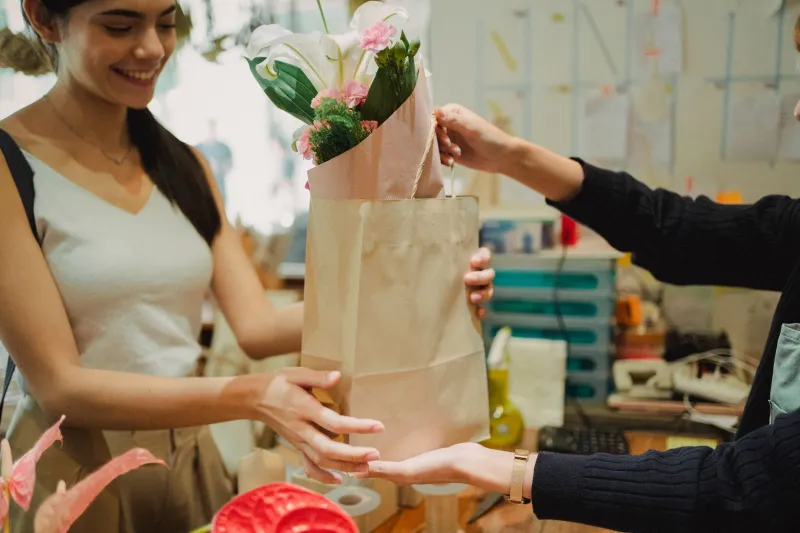
And if you are really short of time, ask the shop to put the bottle in a paper bag and write the note on the bag. It is not elegant, but it is human, and that counts for more than a ribbon.
The ten-minute route, condensed
Walk in. Say what the occasion is, what your budget is, and that you do not know what they drink. Let the staff member pick. Ask what they would buy themselves. Add a handwritten line about food. Pay. Leave.
You will not get the perfect bottle every time, because there is no perfect bottle. But you will get something better than a panic purchase: a gift that looks like you thought about it, even if you thought about it on the walk from the bus stop.