Flight Club: Running a Wine Quiz That Feels Like a Night Out
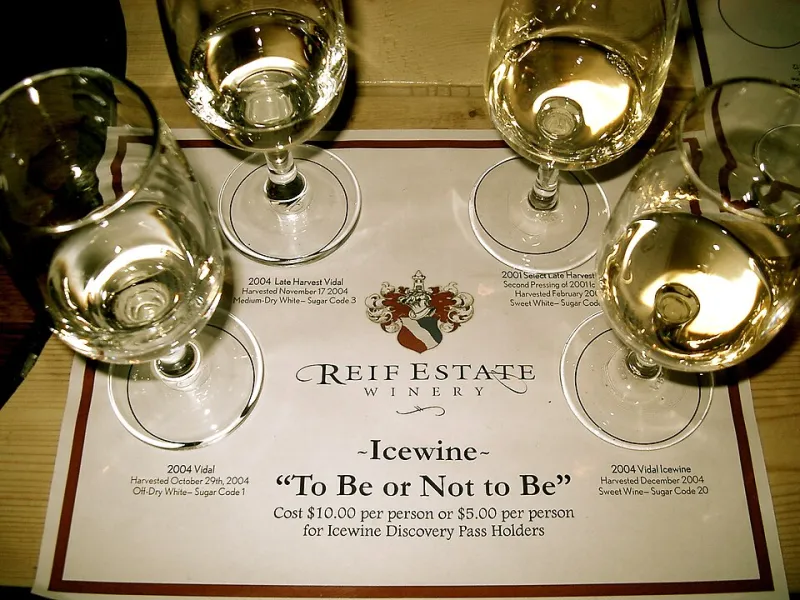
Photo: Craig Hatfield, CC BY 2.0, via Wikimedia Commons
Thursday, half seven, a table for eight. Four of them know what maceration is; the other four once ordered "the house red" and got on with their evening. Somehow you've volunteered to run the wine quiz, and you'd rather it didn't turn into a lecture with a corkscrew.
Good news: it doesn't have to. The trick is to build the evening like a flight rather than a syllabus — several small pours with a single question attached to each, and enough wine in the glass to think about but not so much that the thinking stops.
Start With a Flight, Not a Fact
A flight is just three or four small pours of the same-ish thing, served together, with one question to answer between them. Fifty to seventy-five millilitres a glass is plenty. Anything more and the room gets merry faster than it gets curious.
Some house rules that have saved us before:
- Four wines per round, maximum. Five is where attention goes.
- One question per flight. If it takes more than a sentence to explain, cut it.
- Water, bread, and a jug to spit into. Not because anyone has to spit, but because the option keeps the pace civilised.
- No scoring out of anything that looks like an exam. Teams, not individuals. Arguments welcome, answers not mandatory.
Round One: Same Grape, Different Postcode
This is the round that quietly teaches the most. Pick one grape and pour it three ways from three different places. Chardonnay is the obvious choice: something lean and chalky from Chablis, something rounder from the Mâconnais, and then a warmer-climate bottle from further afield. Riesling works just as well — dry, off-dry, and one that surprises people.
Hand out a sheet with three ticky boxes rather than an open question. "Which is which?" is answerable. "Describe the wine" is homework.
The lesson lands by itself: same grape, different postcode, three completely different glasses. Nobody needs to hear the word terroir unless they ask. If someone does ask, that's your cue to be pleased rather than to hold forth.
Round Two: The Price Is Wrong
Buy three bottles at roughly £8, £15 and £30 — whatever your shelf offers — decant them into jugs or foil the neck and pour blind. Teams have to put them in order of price.
Two things make this round work. First, take the team average rather than singling anyone out; a group guess is braver and more fun. Second, don't pull the party trick of serving a £4 bottle that beats the £40 one. It's a cheap laugh that makes people feel stupid, and it teaches the wrong lesson. The point is gentler and more useful: price doesn't map neatly onto pleasure, and most of us guess wrong some of the time.
When you reveal the answers, say a sentence about why a bottle costs more — yields, oak, ageing, a famous village — then move on. Two minutes of shop-talk per wine is the ceiling.
Round Three: The Food-Match Speed Round
Cheap to run, chaotic in the best way. Five food cards and three wines, one minute per team to draw lines between them. Keep the food dead ordinary: a bag of ready salted crisps, a chunk of mature cheddar, a slice of fruit cake, a pickled onion, a square of dark chocolate.
There are no right answers, so mark it generously and let the disagreements run. This is the round where the quiet person at the end of the table usually gets going, because everyone has an opinion about chocolate and wine and everyone is willing to share it.
The Three-Word Rule for Notes
The fastest way to kill a tasting evening is to hand out lined paper. Notes go on a beer mat, and they follow one rule: three words and a number.
Lemon, stones, long. 7.
Jammy, warm, short. 4.
Three words forces people to commit, and a score out of ten gives you something to compare across the table. If someone wants to write a paragraph, let them — but don't ask for it, and never read yours aloud in full. Tasting notes are scaffolding, not scripture.
Prizes From the Shelf
The best prize for a wine quiz is another bottle of wine. Keep it between eight and twelve quid, choose something with a story you can tell in one line, and wrap it in newspaper so it feels like a present rather than a transaction.
A decent corkscrew is a fine runners-up prize. A wine atlas is not — nobody wants homework in a bag. And if the losing team gets a bag of posh crisps, the mood stays exactly where you want it.
Getting a Mixed Room Talking
Split the room so that each team has at most one person who knows a lot. Left to themselves, enthusiasts cluster and the rest go quiet.
Then, as host, do three things:
- Say at the start that no experience is required — and mean it.
- Never correct a tasting note. If someone gets blackcurrant where you get bramble, write it down.
- Ask open, small questions. "Which would you buy again?" works. "Can anyone detect the malolactic fermentation?" does not.
The Kit List and the Clock
Corkscrew, foil or bottle bags, a jug for spitting, water, bread or plain crackers, one glass per person per round (or two and a rinse), answer sheets, marker, napkins, and a bucket with ice if anything is meant to be cold. That's it.
Run it from half seven to ten: twenty minutes of settling in and first pours, then three rounds at roughly half an hour each with a break in the middle. Finish with something generous in a normal-sized glass and let the quiz dissolve into a conversation, which is the whole point.
Get the flights right and you'll hear the sentence every host wants: I didn't know I liked that. That's not a quiz result. That's a night out.