Write It Down, Drink Better: The Tasting Note That Fits on a Beer Mat
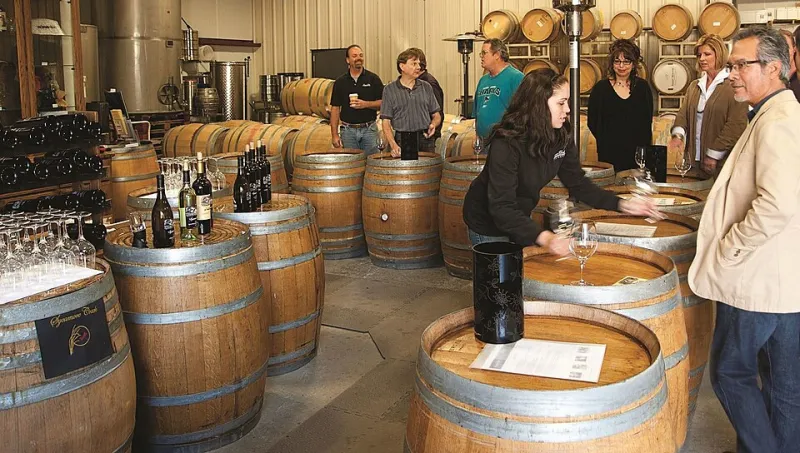
Photo: City of Morgan Hill, Public domain, via Wikimedia Commons
You do not need a leather-bound notebook, a diploma or a poetic vocabulary to remember what you loved. You need three lines. At a wine bar, the chalkboard is seductive and the shop shelf is full of promises, but by the time you get home you remember 'nice' and 'red' and very little else. Tasting notes usually fail because they try to be literature. This method is for drinkers, not exam candidates. It fits on a beer mat, a phone note or the back of a receipt.
Why most tasting notes fail
They are too long, too abstract and too detached from the moment. A note that says 'hints of graphite, sous bois and crushed violets' might be accurate, but it does not tell you whether to buy the bottle again. It does not tell you what you ate, who you were with, or whether the wine felt like a treat or a chore. A useful note needs context, structure and one practical anchor. That is all.
The three lines
Line one is the occasion. Where were you, who were you with, what was the mood? 'Friday, Wine Room, after work, rainy' is a better memory hook than a paragraph of adjectives. It anchors the wine to a moment, and moments are easier to recall than flavour wheels.
Line two is structure. Keep it plain: acid, body, tannin, finish. You do not need to score anything out of 100. Just say whether the acid was low, medium or high; whether the body was light, medium or full; whether the tannins were soft, grippy or absent; and whether the finish was short, medium or long. If sweetness matters, add it. One flavour note is allowed, but it is optional.
Line three is one food pairing. Not a list, not a fantasy dinner party, just one thing you would happily eat with it next time. 'Roast chicken.' 'Salt cod croquettes.' 'A bag of ready salted crisps on the sofa.' The pairing does not have to be sophisticated. It has to be true.
A template you can actually use
- Occasion: Saturday lunch, parents visiting, cold.
- Structure: medium acid, medium body, soft tannins, medium finish.
- Pairing: roast lamb.
That is a complete note. If you want to add the bottle name and price, fine. If you want a star, fine. But the three lines are the engine. Here is another: occasion, bar seat on a Tuesday, solo; structure, high acid, bone dry, light body, long finish; pairing, oysters. You now know more about that wine than most people remember after a whole evening.
How to write it in 30 seconds
Open your phone notes before the first sip disappears. Use your own words. Do not chase aromas you cannot identify; 'smells like something I want to drink' is a valid observation. Write the three lines while the glass is still in front of you. If you loved the wine, star it. If you did not, say why in the structure line: 'too much oak, low acid, flabby finish.' That is more useful than a vague memory of disappointment.
Do not turn it into a diary you will never reread. The point is not to document every bottle; the point is to build a small record you can search. Keep the same format every time. After a month, you will have a personal map of what you actually like, rather than what you think you should like.
How to use it to buy better
Before you go to a shop, search your notes for 'high acid' or 'light red' or 'long finish'. At a wine bar, ask for something in the same mood as the note you loved last week. When you are buying a case, check whether the wines you are considering match the structure you keep returning to. You will start to spot patterns: you like high-acid whites, you do not like heavy oak, you prefer soft tannins with tomato-based food. That is not pretentious. That is just paying attention.
You can also use the notes to compare. Same grape, different region. Same region, different producer. Same price, different style. The three lines give you a consistent language, which is far more useful than a hundred disconnected adjectives.
The one rule: keep it short
If a note takes more than a minute, you will stop writing them. So keep it short. No scores unless you find them useful. No pressure to be poetic. A note that says 'Tuesday, high acid, chips' is more valuable than a paragraph you never reread. In 2026, with wine lists getting longer and labels getting stranger, a small personal record is a quiet superpower. Write three lines. Drink better.