The Stem Before the Sip: Reading a Wine Bar's Glassware Like a Regular
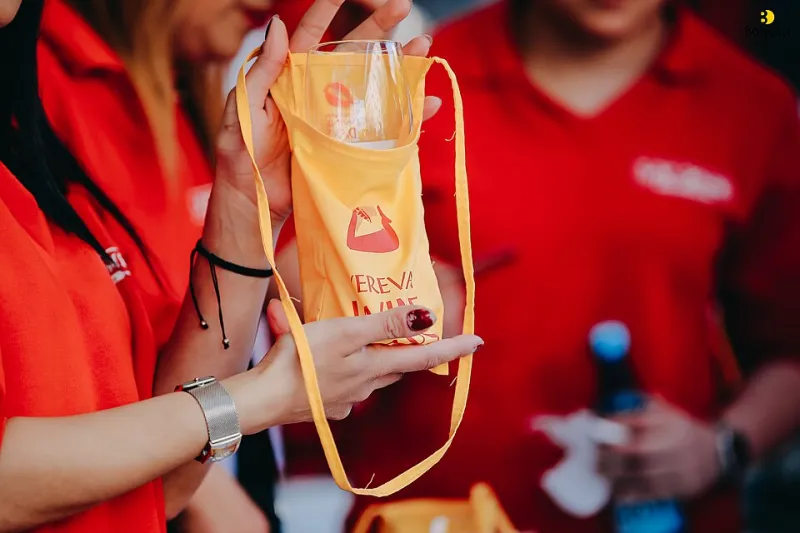
Photo: Bogossi Production, CC BY-SA 4.0, via Wikimedia Commons
There is a moment, just after you sit down in a wine bar, when the glassware arrives before the wine list does. It might be a pair of slender stems, a sturdy tumbler, a water glass with a lemon smear on the rim, or a flute so thin it looks like it might dissolve under a hard stare. Most of us ignore it. We shouldn't. In a good wine bar, the glasses are not background equipment. They are the first sentence of the service, and they are usually telling you something useful.
The Handshake at the Table
Think of the glassware as the bar's handshake. A clean, well-polished stem suggests someone has thought about the drink before it is poured. A chipped water tumbler is not a crime — plenty of excellent bars are proudly informal — but if the chip is on the rim you are about to drink from, that is a different message. It says nobody checked. And if nobody checked the glass, you can reasonably wonder who checked the open bottle.
This is not about demanding Riedel at every turn. A neighbourhood wine bar can serve very good wine in a simple, tough little glass and still be doing the right thing. The question is not whether the glass is expensive. It is whether it is fit for purpose, clean, and given with a bit of care. A bar that treats its glassware as disposable is often a bar that treats its wine list as a backdrop rather than a working document.
Shape Is an Argument, Not a Decoration
Glass shape is a practical clue. A single universal glass tells you the bar wants flexibility: one shape, many wines, no fuss. That can be genuinely liberating, especially if the list is short and built for by-the-glass drinking. A bar with a fleet of different shapes — a wide bowl for reds, a smaller tulip for whites, a proper sherry copita, a flute for fizz — is making a different argument. It is saying that the list has enough range to deserve the kit.
Neither approach is automatically better. Too many shapes can be theatre. I once counted five different stems on a table before anyone had ordered, which felt less like hospitality and more like a test I hadn't revised for. But when the shapes match the list, it is a quiet pleasure. A bar that pours a delicate English sparkling wine into a thistle-thin flute is making a point about aroma. A bar that pours the same wine into a small tumbler is making a different point — usually about speed and sunshine, which is not always wrong.
The Polish Test and the Nose Test
Before you get precious about shape, check the polish. Hold the glass up to the light. Look for streaks, dust, water spots or that faint cloudy haze that suggests a hot dishwasher and a hard rinse. A slightly streaky glass is not the end of the world, but a glass that smells of cardboard, damp cloth or detergent is a problem. Wine is mostly aroma. If the glass has a smell of its own, you are not tasting the wine; you are tasting the washing-up.
This is where a polite request is entirely reasonable. You do not need a speech. A simple 'Would you mind giving this one a quick rinse? There's a bit of a smell' is enough. In a decent bar, the answer will be yes, and the replacement will arrive without drama. If it arrives with a sigh, file that away. It is information.
Pour Size and the First Clue About Value
Pour size is the next clue, and it is often misunderstood. A generous pour is not automatically a good pour. A 125ml measure in a proper glass can feel mean if the glass is enormous, while a smaller glass filled to a sensible level can feel just right. What matters is consistency and honesty. If the house white arrives in a thimble while the bottle next to it gets a generous glug, ask what the measures are. A bar that is vague about pour size is usually vague about value.
A well-chosen glass also gives the wine room to breathe. If you are ordering a red with a bit of structure, a small tumbler is not doing you any favours. If you are ordering a light, aromatic white, a huge bowl can sometimes push the perfume so far up your nose that it becomes a caricature. The glass should make the wine easier to understand, not harder.
Asking for a Different Glass Without Making It a Thing
The gentle rule is this: ask once, ask with a reason, and do not turn it into a lecture. 'Would you mind if I had this in a larger glass?' is a perfectly good sentence. 'I think you'll find this wine is completely wasted in this thistle' is not. If the bar can accommodate you, lovely. If it cannot, accept it and drink the wine. A wine bar is not a laboratory, and the person behind the counter is not your personal glassware sommelier.
There is also a time and a place. Asking for a different glass for every wine in a flight is a bit much. Asking because the glass is dirty or chipped is always fair. Asking because you prefer a bigger bowl for a serious red is fine if the bar is quiet. Read the room. The best wine bars are generous with their kit, but generosity is a two-way street.
What It Means for Your Order
So how do you use all this before the first pour? If the glassware is simple but spotless, trust the by-the-glass list and ask for recommendations. If the stems are properly matched to the list, it is worth stretching to the bottle you have been eyeing. If the glasses feel like an afterthought, keep your order straightforward and lean on the house pour. And if the water tumbler is chipped, say something kindly. You are not being difficult. You are just reading the room.
Glassware is not the whole story of a wine bar. The list, the people and the welcome matter more. But it is the first clue, and it is free to read. Next time you sit down, look at the stem before you look at the list. It will usually tell you whether to settle in or keep your expectations modest. Either way, you will drink better for noticing.