Read the Sky, Not the Menu: Winter Wine for British Weather
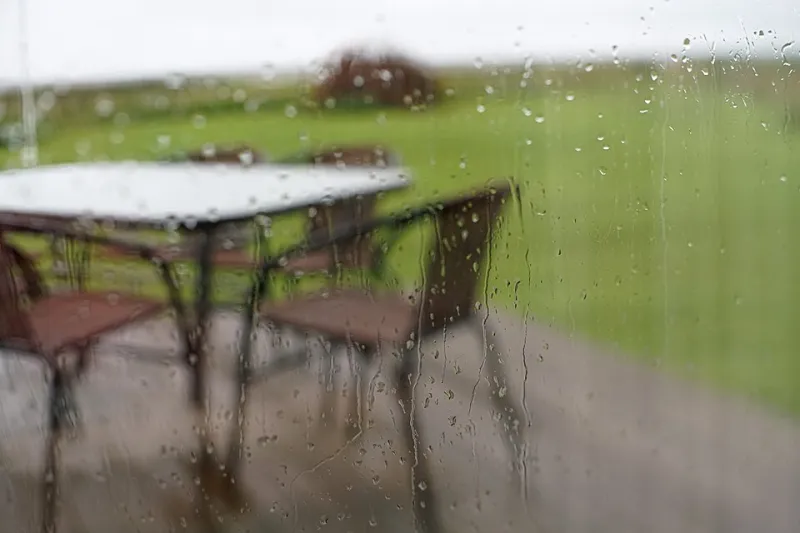
Photo: Marharyta Laktsevich-Iskryk, CC BY-SA 4.0, via Wikimedia Commons
Some days the forecast is less a prediction than a shrug. Cloudy with a chance of everything. Drizzle at lunch, a clear cold snap by four, wind rattling the wine bar windows by seven. British winter does not deal in clean categories, and neither should your glass.
The usual advice is to pair wine with food. Sensible, useful, occasionally thrilling. But on a dreich Tuesday in November, the more pressing question is not what you are eating. It is what the day has done to your mood. Weather is the unofficial menu. It tells you whether you want lift, weight, grip or something gentle enough to stop the afternoon from arguing with you.
So here is a practical way in: read the sky first, then the list. You do not need to know grape varieties or soil types. You need three or four words for the mood you are after — and a willingness to say them out loud.
Damp Mondays need a pulse
A damp Monday is not a tragedy. It is just low, grey and slightly reluctant. The sky sits on the rooftops, the pavements shine, and the wine list can feel like a lot of effort. This is not the moment for a heavy, oaky white or a red with something to prove.
Ask for something bright and bone-dry with a saline edge. In a wine bar, that might be Muscadet, Picpoul de Pinet or a young, unoaked Chenin Blanc. In a shop, look for a bottle of Muscadet Sèvre-et-Maine, a crisp dry Riesling from Alsace, or a chilled Gamay that tastes of redcurrants and wet stone. The point is not chilliness for its own sake. It is refreshment with a bit of nerve — a glass that behaves like opening a window.
A useful phrase at the bar: ‘Something crisp and lean, please — not too fruity.’ That gives the staff a direction without turning into a tasting-note recital. If they offer you a small taste, take it. Damp Mondays are exactly when a second opinion earns its keep.
The cold snap wants texture
Then the weather changes its mind. A clear cold snap arrives: blue sky, frost on the car roof, breath visible at the bus stop. These days feel sharp and clean, and they tend to make people order the same thing — a big red, please. Fair enough, but cold weather does not automatically mean tannin. It often means texture.
Think white wines with a little weight and reds with cool fruit. A white Rhône, a mature Chenin Blanc or a white Burgundy with some flesh will feel generous without going heavy. On the red side, Pinot Noir, Mencía from Bierzo or a cool-climate Syrah give savoury depth without the jammy swagger. In the shop, a bottle of Saint-Joseph or a Chinon would do nicely alongside a white Rhône or a dry Vouvray.
Try saying: ‘Something with a bit of weight but a fresh finish.’ Or, if you are ordering red: ‘A red with a savoury edge — not too ripe.’ That usually lands you somewhere between comfort and clarity, which is exactly what a frosty afternoon asks for.
Wind and rain ask for grip
Blustery weekends are their own genre. Umbrellas inside out, hair in your mouth, a trip to the market that turns into a small expedition. You want a wine with grip — something that stands up to the noise. Not necessarily huge, just sturdy.
This is tannin weather: Cabernet Franc, Nebbiolo, Mourvèdre, a young Rhône red. Ask for ‘something with grip and a savoury kick’ or ‘a red with a bit of structure but not too polished.’ A Chinon, a Crozes-Hermitage or a Bandol would all fit. If the bar has a chalkboard by the glass, look for words like ‘pepper’, ‘herbs’ or ‘leather’ — not because those flavours are mandatory, but because they usually signal a wine with a bit of backbone.
And if you are eating? Keep it simple. Something roasted, something with a bit of fat, something that came out of the oven and landed on a plate. The wine does not need to match every ingredient. It needs to match the weather outside the window.
Grey days suit the middle ground
The hardest days are the in-between ones. Not cold enough for a fire, not bright enough for a brisk walk. The sky is the colour of a filing cabinet and nobody can agree on whether to turn the heating on. These days call for the middle ground: wines that are soft, textural and quietly useful.
A Pinot Gris from Alsace, an orange wine with a gentle grip, or a light red such as Frappato or Cinsault can fit without demanding attention. In a wine bar, ask for ‘something soft and textural — not too serious.’ In a shop, look for an unoaked Cabernet Franc from the Loire or a white with a little skin contact. The aim is a glass that feels like a good conversation: easy, but not empty.
This is also the weather for a half bottle. Not because you are being sensible, but because grey days often come with a change of plan. A small bottle gives you room to move.
How to ask without a weather manual
The best wine bar staff are used to translating moods. You do not need to say ‘I would like a wine with medium-plus acidity and a saline finish.’ You can say:
- ‘I want the wine equivalent of a scarf.’
- ‘Something that tastes like a sharp morning.’
- ‘Not too heavy, not too thin — just useful.’
- ‘I am damp and need cheering up.’
Those are not silly requests. They are directions. The more specific you are about the feeling, the less likely you are to end up with a glass that fights the day. If you get it wrong, no drama. Wine is not a test. Order a second glass and call it research.
The two-bottle shop strategy
If you are buying for home, buy for the forecast rather than the fantasy. One bright bottle and one broader bottle will cover most British winter moods. A Picpoul or Muscadet for the damp days; a white Rhône or Chenin for the cold snap; a Chinon for the wind; a soft red for the grey. You do not need a cellar. A cool cupboard and a willingness to chill a red for twenty minutes will do.
And when the forecast cannot decide? Start with the brighter bottle. You can always open the second one if the weather turns. It usually does.
A pocket forecast
- Damp Monday: Picpoul, Muscadet, dry Riesling, chilled Gamay.
- Clear cold snap: white Rhône, Chenin Blanc, Pinot Noir, Mencía.
- Blustery weekend: Chinon, Crozes-Hermitage, Bandol, Mourvèdre.
- Grey in-between: Pinot Gris, gentle orange wine, Frappato, unoaked Cabernet Franc.
No jargon required. Just look out of the window, describe the mood, and let the list do the rest.