The Honest Order: What to Say in a Wine Bar When You Haven’t a Clue
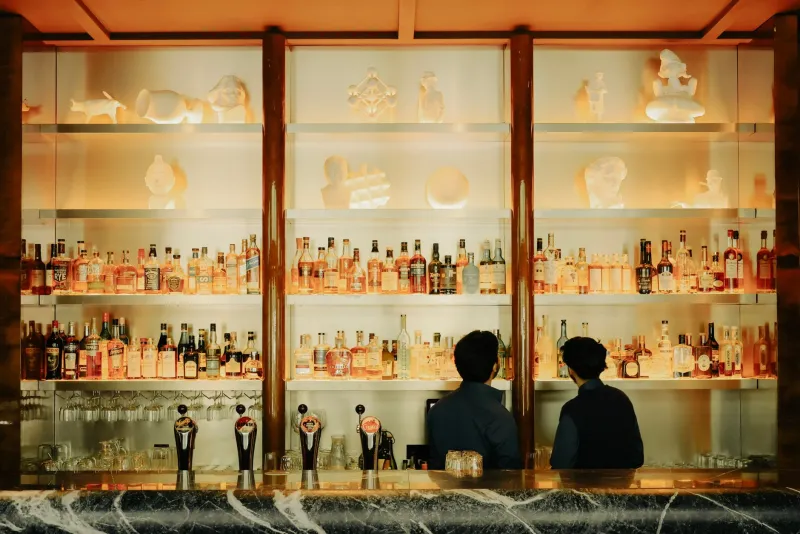
There’s a particular silence that descends on a wine bar the moment the person behind the counter asks what you fancy. It’s Thursday, the room is warm, the chalkboard is written in a hand you can’t decipher, and you have approximately four seconds to produce a grape name before they move on to the couple behind you.
Most of us fill that silence with noise. We say “something light and fruity” in a hopeful voice, or we panic and point at the second-cheapest red. And then we spend eleven quid nursing a glass we didn’t really want, being polite about it.
There is a better way, and it doesn’t involve learning a single thing about viticulture. It involves asking three questions — out loud, in plain English — and letting someone else do the thinking.
First, the bluff has to go
Here’s the thing about people who work on a wine bar floor: they have heard every bluff. They know that “I’m really into natural stuff” sometimes means “I read one article”, and that “I usually go for Burgundy” is often a way of saying “I once spent forty pounds and felt brave”.
They are not judging you for it. They have done it themselves, in a different shop, about a different thing. But the bluff costs you something, because it gives them nothing to work with. Ask for “something interesting” and you’ll get whatever they’re currently trying to shift. Ask them a real question and you’ll get a real answer.
So the goal isn’t to sound knowledgeable. It’s to be legible.
Question one: What do you drink when nobody’s watching?
Skip the grape. Describe the memory.
Instead of “Do you have a Gamay with a bit of carbonic lift?” — which you may have read somewhere and which will not help you here — try: “I mostly drink red. I had one in a pub in Bristol last month that tasted like squash and I loved it, no idea what it was.”
That sentence is gold. It tells the person three things at once: your colour, your palate, and your tolerance for a bit of fun. Brisol-by-the-glass is a flavour profile now. They can work with it.
Other openings that tend to land:
- “I’m a Rioja person in winter and a Pinot person when it’s warm — what’s closest to that mood?”
- “I like reds that don’t feel like a hug. Something with a bit of grip to it.”
- “I don’t like anything sweet. Bone dry, and I don’t mind if it’s a bit weird.”
Notice that none of these require a single technical term. They require an appetite and a memory of it.
Question two: Say the number out loud
This is the one people mumble, and it’s the one that matters most. If you don’t give a budget, they will guess — and in a wine bar, guessing tends upward, because the interesting bottles usually sit a rung or two above the house pour.
Say it clearly, and say it before they start pulling corks: “I’m looking at about nine or ten pounds a glass.” Or: “A bottle around thirty would be lovely.” Or, if you’re treating yourself: “I’m happy to go higher tonight — what’s actually worth the extra?”
All three are fine. All three get you a better glass than a vague wave at the list, because a budget is a shape, and it lets them make a recommendation rather than a pitch.
And yes, you’re allowed to ask: “Is there anything good near the bottom of the list?” It’s a completely normal question and you’ll usually get an honest answer, because staff drink on a budget too.
Question three: What’s arriving with it?
Food changes the answer more than any grape name ever will. Mention it even if it’s only a bowl of olives.
“I’m having the fish and chips” will usually get you something with acid and a bit of cut. “Just the cheese and a bit of charcuterie” opens up a different set of doors entirely. And “I’m only here for twenty minutes before the 19:42” is genuinely useful information — it steers them towards something that drinks well immediately and won’t improve in the glass while you’re watching the clock.
So the three questions, in one breath: what do you normally enjoy, what do you want to spend, and what’s coming with it.
Reading the answer properly
Once they start talking, listen for verbs rather than nouns. The names are the least important part of what they say.
- “Fresh”, “juicy”, “crunchy”, “chalky” — high acidity, drink it now, probably white or a light red.
- “Chewy”, “grippy”, “structured” — tannin. Good with meat, rough on its own.
- “Ripe”, “round”, “soft”, “generous” — warmer, lower in grip, easier going.
- “A bit funky” — either a warning or an invitation. Ask which. “Funky how?” is a perfectly good follow-up.
Also watch what they do while they talk. If their face changes and they reach for a bottle with some enthusiasm, that’s your bottle. And if you can’t decide, ask: “What would you drink with it?” If they say the same thing without hesitating, that’s an answer with a signature on it.
One more thing you’re allowed to do: ask for a taste. At the counter, a small pour before you commit is almost never refused, and in an independent shop it’s practically part of the service. “Could I try a drop of that?” is not a cheeky question.
When the answer misses the mark
Sometimes it won’t land. Say so quickly and kindly, rather than sipping politely for an hour.
“That’s a bit more oak than I go for — is there something in the same price bracket that’s leaner?” is all you need. No one takes offence. A miss is useful data: now they know your ceiling for oak, your patience for sweetness, whether “a bit weird” was bravado.
The same script, in a shop
If you’re buying rather than sitting, reorder the questions. Budget first — “I’ve got two bottles to take to dinner and about twenty-five quid” — then the food, then whether you’re drinking tonight or on Saturday. Independent shops live for this exchange; it’s the most interesting part of their afternoon. Just don’t say “I’m just looking” if you’re not, because it shuts the conversation down before it starts.
The only thing worth remembering
You aren’t asking for a favour. You’re briefing someone who does this for a living, with the same handful of facts you’d give a taxi driver about where you’re going.
Say what you normally enjoy, say the number, say what’s on the plate. That’s the whole trick. The better glass tends to follow.