The Salted Almond Oracle: What Bar Snacks Say About the Wine List
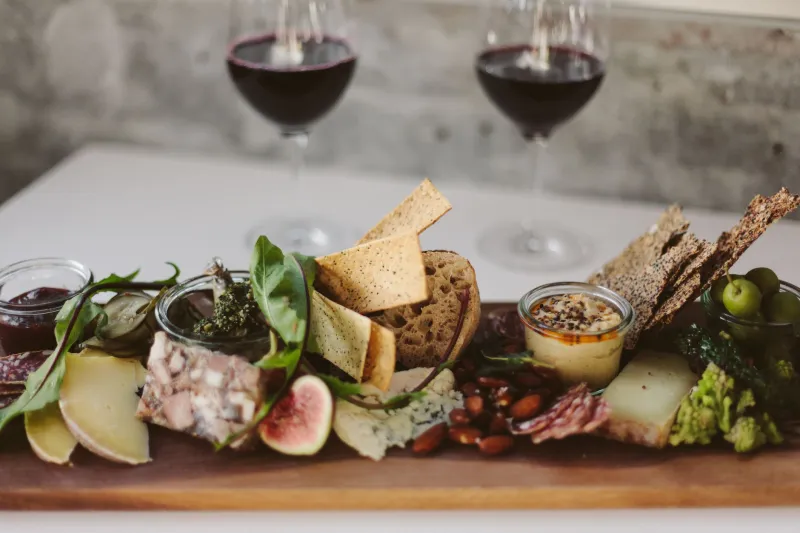
There are people who choose a wine bar by the length of its list, and people who choose it by the comfort of its stools. Both are reasonable. But if you want to know how seriously a place takes the business of drinking well, look lower down. Look at the snack shelf.
A bowl of something salty is not a garnish. It is an editorial statement. It tells you whether the bar expects you to have one quick glass and leave, or whether it has planned for you to settle in, argue about the red, and order a second bottle because the first one went down rather too easily with a bag of crisps. The pickled egg test is not scientific, but it is remarkably hard to fail without revealing something.
The shelf is a sentence, not a garnish
You can learn a lot from what is within arm's reach of the till. A lone dispenser of dry roasted peanuts suggests a pub that happens to sell wine. A proper ceramic dish of warm almonds suggests someone has thought about the first ten minutes of your evening. A fridge-door selection of olives, cured meat and a decent hard cheese suggests the bar understands that wine is food, or at least that wine makes people hungry.
This is not about poshness. A bag of cheese and onion crisps can be a perfectly serious accompaniment to a glass of dry sherry. The question is intent. Does the snack menu exist to soak up alcohol, or to make the wine taste better? The best bars do both, quietly, without a lecture.
Crisps: the honest barometer
Ready-salted crisps are the most honest snack in Britain. They are salty, fatty and crunchy, and they make almost any dry white taste more generous. A bar that keeps a proper bowl of them, rather than a sad packet behind the counter, is usually a bar that wants you to stay for another glass.
Pair them with something brisk and salty: a dry Fino, a traditional-method sparkling, or a lean, chalky white. If the crisps are prawn cocktail, lean into the silliness and order something with a bit of acidity and lift. The point is not to be precious. The point is to notice that salt and bubbles are one of the great partnerships of the bar world, and that a snack shelf without any crunch is a shelf that has given up on joy.
Olives, almonds and the aperitif test
Good olives tell you the bar expects an aperitif trade. Oily, bitter, meaty olives need something dry and savoury alongside them: Manzanilla, dry vermouth, a crisp Albariño, maybe a chilled amontillado if the bar is feeling generous. Warm almonds, especially if they are salted and slightly oily, are happier with richer whites or a light, chillable red.
If the olives are dull and the almonds are stale, do not storm out. But adjust your expectations. A bar that cannot be bothered with the first thing you taste is unlikely to have spent much time on the second.
Pickled eggs and the acidity audit
This is the real test. A pickled egg is salty, sharp, vinegary and faintly ridiculous. It demands a wine with acidity and nerve. A dry Riesling, a Chenin Blanc, a high-acid sparkling, or a bone-dry sherry will all rise to the occasion. A flabby, oaky white will simply surrender.
A bar that stocks pickled eggs is usually a bar with a sense of humour and a decent grip on acidity. If it stocks pickled eggs and has nothing sharp on the list, that is not a crime, but it is a clue. The snack shelf and the wine list should be in conversation. When they are not, you end up with a plate of vinegar and a glass of something soft and vague, which is nobody's idea of a good time.
Pork scratchings and the tannin question
Pork scratchings are salty, fatty and aggressively crunchy. They need something with structure or bubbles. A chilled light red, a dry sparkling, or a savoury, nutty sherry will all work. Big, oaky reds tend to overwhelm them, and the scratchings tend to overwhelm the wine right back.
Cured meats sit in the same territory. Salami, chorizo and prosciutto all love a glass with freshness and a little grip. If the list is all soft, jammy reds, the snack shelf will feel like a challenge rather than a pleasure. If there is something chillable and peppery, order it and thank the person who put it there.
The linger factor
The snack menu is also a hospitality signal. Small bowls mean quick visits. Proper plates, bread, butter, water without asking, and a second napkin mean the bar has planned for you to be there a while. That is not always what you want, but it is useful to know.
A bar that gives you something to do with your hands is a bar that expects a second glass. A bar that gives you a pickled egg and a decent sherry is a bar that understands the assignment.
Building a winter grazing table that works with wine
For hosts, the lesson is simple: build a table with contrast, not volume. Start with three salt levels: crisps, olives and nuts. Add one pickled thing, one fatty thing and one carby thing. Bread and good butter will do more for a wine list than another bowl of sad crudités.
Pairing logic helps. Salt and acid love each other. Fat loves bubbles. Smoke and salt love light reds. Keep the bowls small and replenish them. Warm the nuts, but do not over-chill the reds. Put out water and napkins before anyone has to ask. A winter grazing table should feel like an invitation to stay, not a test of endurance.
Use the test without being insufferable
You do not need to interrogate the staff about their snack sourcing. Ask what they would pair with the pickled egg, and then order it. Notice whether the shelf makes you want another glass. That is the whole test. A good wine bar does not need to shout about its snack menu. It just needs to make the shelf and the list feel like they belong to the same evening.