Pull Up a Stool: The Quiet Magic of Drinking at the Counter
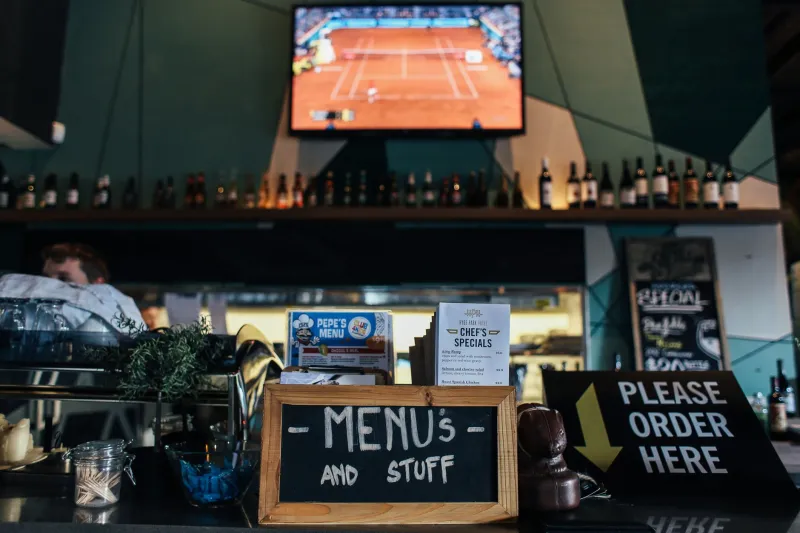
There is a particular sort of November evening in the UK when the pub is too loud, the flat is too quiet, and what you really want is a glass of something good, a bowl of olives and a bit of company that does not require a group chat. The bar seat is made for this. Not the table by the window, not the booth in the corner, but the stool at the counter, where the bottles are open, the staff are nearby and the conversation tends to happen sideways rather than across a table.
Somewhere along the way, the bar seat picked up a reputation as the waiting area. The place you perch while your table is being wiped down. The solo drinker’s consolation prize. That is a shame, because in a good wine bar the counter is the main event. It is where you can learn more in twenty minutes than you might from a month of scrolling through grape guides, and where a glass can turn into a proper conversation without anyone producing a clipboard.
The stool has a bad reputation
A table says: sit here, order, eat, leave. A bar seat says: join the room. That is not always what people want, and nobody should be pushed towards the counter if they would rather sink into a corner. But for anyone drinking alone, asking for tastes or trying to get a handle on a list without booking a formal tasting, the stool is quietly brilliant.
It also suits the way many UK wine bars actually work. The list might be short, the open bottles might change by the week, and the person behind the bar is usually the same person who chose them. Sitting at the counter puts you in the path of that knowledge. You are not interrupting a lecture; you are just close enough to ask what is open and what they would drink with the gruyère toastie.
Why sideways works
Face-to-face conversations about wine can feel like exams. Someone asks what you think, you panic, and suddenly you are describing a perfectly nice Gamay as ‘a bit red’. Sideways conversations are easier. You are both looking at the bottles, the chalkboard or the room. The pressure drops. You can say, ‘I usually drink unoaked Chardonnay, but I fancy trying something with a bit more texture,’ and see where that goes.
This is also why the bar seat is good for learning without a formal tasting. You are not working through a flight sheet or spitting into a cup while someone talks about malolactic fermentation. You are drinking a glass, asking a small question and noticing the answer in your mouth. That is often how wine knowledge actually sticks.
How to ask for a taste without making it a thing
There is a right way to do this, and it is mostly about reading the room. If the bar is three deep with Friday-night orders, do not launch into a twelve-question survey of the open bottles. If it is a quiet Tuesday and the person behind the bar is polishing glasses, a friendly question is welcome.
A good opening is simple: ‘What have you got open at the moment?’ That gives staff a chance to tell you what is showing well, what is nearly finished and what they are excited about. If something sounds interesting, ask for a small taste. Not a row of tastes. One or two. ‘Could I try a sip of the Blaufränkisch before I commit?’ is perfectly reasonable. ‘Can I try everything on the board?’ is a tasting menu disguised as a chat.
It also helps to order something. A glass, a snack, a bottle to take home. The counter is not a free sample counter, and the best bar relationships are reciprocal. Ask, taste, then buy the glass you liked. If you did not like it, say so cheerfully and move on. Staff would rather you drank something you enjoy than politely suffered through a glass you do not.
Build a flight from the open bottles
You do not need a printed flight to drink across a few wines. The open bottles behind the bar are already a mini wine list, and they are often the most interesting thing in the building. A useful approach is to start with something fresh, move to something with a bit more weight and finish with something that makes you pause.
For example: a dry white or a light red to begin, a richer white or an earthy red in the middle, then a small glass of something sweet or fortified if the bar has one open. Keep the pours small. Ask for two or three half-glasses rather than three full ones. If you are sharing, even better. The point is not to tick boxes but to notice the contrast. ‘This one is brighter, this one is rounder’ is a perfectly good tasting note.
The bar staff can help you shape it. Tell them what you normally drink, what you are curious about and how long you are staying. ‘I’ve got an hour and I’d like to try three things that taste different from each other’ is a great brief. It gives them something to work with and saves you from guessing.
Pairings, not a lecture
One of the most underrated things about sitting at the bar is that you can get a pairing without turning it into a performance. Tell the staff what you are eating, what you are in the mood for and what your budget is. Then ask what they would pour. That is it. You do not need to explain the science of acidity and fat. You just need to give them enough information to make a good call.
If you are ordering several small plates, ask for a glass that can move between them rather than a different wine for every dish. If you are having one big bowl of something, say so. If you are not sure, say that too. ‘I’m having the mushroom toastie and I want something that feels autumnal but not heavy’ is a useful sentence. It is also a much nicer way to spend an evening than trying to reverse-engineer a pairing from a textbook.
A few house rules for the counter
Do not monopolise the bar. A conversation is lovely; a hostage situation is not. If the place fills up, make room, settle your bill and let someone else have a turn. Ask before you take a taste, and accept a no with good grace if the bottle is nearly finished or the bar is slammed. Keep your voice at a level that lets other people enjoy their evening. And if you are drinking alone, remember that you are allowed to be there. You do not need a reason beyond wanting a good glass of wine and a bit of atmosphere.
The bar seat is not the lesser seat. It is the seat where the evening can go sideways in the best possible way: a question about a grape, a taste of something unexpected, a pairing suggestion that lands, a chat about the bottle you are going to take home. Pull up a stool. The conversation is better from here.